
Nasal Endoscopy: Accurate Diagnosis for Snoring & Sleep Disorders
Introduction
Snoring may appear to be an everyday occurrence, but it is frequently a warning sign that there are more serious issues with your ability to breathe while you sleep. Loud snoring is usually the result of a person’s nasal structure, inflammation, or a constricted airway. An endoscopic procedure providing real-time visual access within the nasal passages and throat will assist in identifying the causes of your loud snoring, as well as providing a safe and effective way to accurately diagnose and treat your condition over time by providing optimal sleep improvement and long-term effects from treatment.
Nasal Endoscopy for Snoring: Accurate Diagnosis for Sleep and Breathing Disorders
Nasal endoscopy for snoring visualizes airway blockage precisely
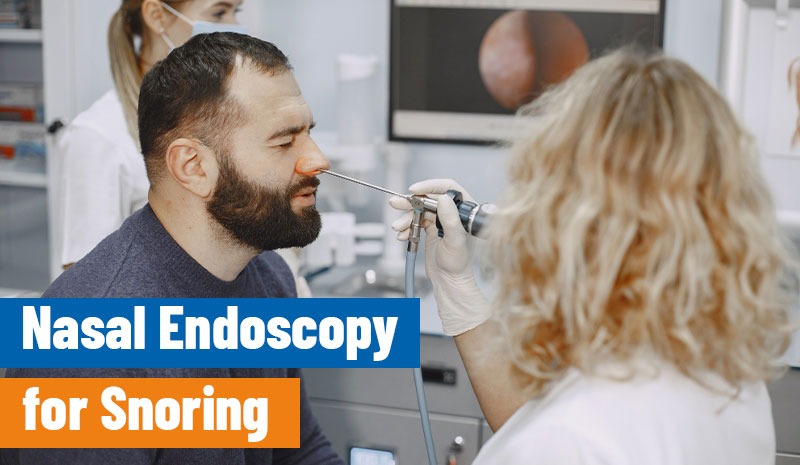
Nasal endoscopy is used to diagnose snoring among the ears, nose, and throat (ENT) specialist by inserting a flexible camera through the nose to assess and assess the inner nose, nasopharynx, and upper respiratory (airway) tract.
It is also helpful in identifying:
- Congenital nasal structure
- Enlarged Concha (Turbinates)
- Nasal Polyp
- Adenoid Tissue
- Nasopharynx
Doctors can see the interior of the nasal cavity in real time on a display monitor. Physicians also record their observations for follow-up. The development of the best approach for treating snoring is based upon an accurate representation of the nasal and airway passages.
ENT specialists use nasal endoscopy to diagnose snoring causes
During outpatient visits, ENT specialists use nasal endoscopy to evaluate a person’s nasal cavity. Once a topical anesthetic spray is applied, it helps reduce discomfort associated with examination and also reduces reflexive nasal responses in a person who has been examined.
- Nasal cavity width
- Septal alignment
- Turbinate size
- Mucus drainage
- Airflow patterns
By using this technique to examine a person’s nasal passages, an ENT specialist can identify issues associated with snoring that would typically not be identified through a surface examination alone. A direct visual inspection of a patient’s nasal passages provides an ENT specialist with greater confidence in the accuracy of their diagnosis when identifying the reasons why a person is snoring.
Nasal endoscopy test remains safe and minimally uncomfortable
The majority of patients find nasal endoscopy tolerable due to the thin and flexible nature of the instrument used. Typically, pressure will be felt after the insertion of the tube rather than pain.
- No incisions
- No general anesthesia
- Minimal bleeding risk
- Rapid recovery
Very few serious complications occur as long as the test is performed by trained providers.
Airway obstruction evaluation reveals structural and inflammatory problems
The primary purpose of this evaluation is to assess the severity of a patient’s airway obstruction. During sleep, tissue vibrations due to a lack of airflow are the cause of snoring.
- Septal deviations
- Swollen turbinates
- Nasal valve collapse
- Chronic sinus inflammation
- Tumors in rare cases
It also assesses soft palate movement as the doctor can visualize where the airway narrows during various breathing tests, which can assist the doctor in determining the best therapy plan for each individual.
Selected patients benefit most from nasal endoscopy for sleep disorders
After a clinical screening, doctors prescribe nasal endoscopy for people suffering from sleep disorders. This procedure is useful when it comes to snoring cases that persist or occur very severely.
- Loud habitual snorers
- Suspected sleep apnea patients
- Chronic mouth breathers
- Nasal blockage sufferers
- Recurrent sinus infection patients
The results of a sleep breathing assessment are enhanced when nasal endoscopy findings are used along with sleep studies. Combining these two diagnostic methods allows for the creation of a very detailed airway map.
Nasal endoscopy test requires only a short clinic visit
Typically, a nasal endoscopy can be done in about 5 to 10 minutes. There are no special preparations; however, a nasal spray may be used, along with providing the surgeon with a quick medical background.
- Patient sits upright
- Doctor applies anesthetic spray
- Scope enters one nostril gently
- The doctor inspects both sides
- Findings appear on screen
A patient who has undergone a nasal endoscopy will typically have no restrictions on their normal daily activities after the procedure. It is safe for them to drive or return to work on the same day.
Post-test findings guide personalized snoring treatment plans
Use nasal endoscopy to make informed treatment choices. Physicians will develop a treatment plan tailored to the blockage’s type and severity.
If you have a nasal blockage, some potential treatment options are:
- Allergy management
- Nasal steroid sprays
- Saline irrigation
- Weight control advice
- CPAP referral
- Surgical correction when needed
ENT surgical options include septoplasty, reducing turbinate size, and adenoid removal for certain pediatric patients. A personalized treatment plan is essential for optimal long-term management of snoring.
Nasal Endoscopy Compared With Other Diagnostic Tools
A clinical examination provides you information on the structure of the nasal cavity while imaging provides you information on the structure of the nasal cavity and airflow patterns. Nasal endoscopy gives you both of those benefits at the same time.
The advantages of nasal endoscopy compared to imaging are:
You are able to examine the airway during an active session (i.e. you are able to determine how your airway behaves during your normal respiration).
- Live airway assessment
- Immediate interpretation
- Lower cost
- No radiation exposure
Nasal endoscopy cannot replace a sleep study for diagnosing sleep apnea; it can complement it.