
Endoscopic vs Microscopic Ear Surgery: Which is Better?
Introduction
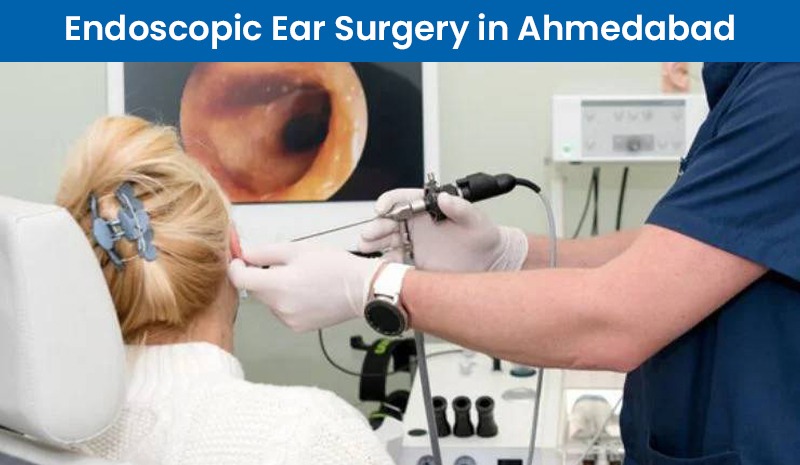
The use of endoscopic ear surgery in Ahmedabad has vastly spread after the method was promoted as a minimally invasive alternative to the traditional microscopic ear surgery. Patients who are first looking for safer and less traumatic procedures are asking if endoscopy is indeed better. This piece of writing is intended to show a comparison between endoscopic and microscopic ear surgery in terms of different parameters such as effectiveness, safety, recovery, and suitability for different ear conditions, all from the perspective of the local context. Moreover, we will briefly mention how surgeons like Dr. Mihir Mehta at Aashwi ENT Hospital are instrumental in introducing this cutting-edge technique into Ahmedabad, making ear health-related decisions more accessible to patients.
Which is safer and more effective: endoscopic ear surgery or microscopic ear surgery?
In several comparative studies and meta-analyses, it has been observed that both endoscopic and microscopic methods yield almost equal results in terms of graft success rates and hearing improvements after tympanoplasty (repair of eardrum perforation). According to a meta-analysis of type I tympanoplasty, there were no statistically significant differences in the rates of graft uptake and hearing results between the two approaches, but it was found that operative time and complication rates were significantly lower in endoscopy.
Another systematic review supports this contention, stating that clinical outcomes (graft success, hearing gain) do not differ between the two approaches but that endoscopic techniques are associated with shorter operative times and lower rates of complications.
The comparison between endoscopic and microscopic techniques in a study has found the healing phase to be faster in the endoscopic group, as well as lower residual or recurrent disease rates in some cases (5.0 % vs 22.5 %, recurrence 7.5 % vs 27.5 %).
Nevertheless, as many studies emphasize, surgeon experience and the judiciousness in patient selection remain paramount in this regard.
To give a summary, it would then seem that the choice of method comes down to the skill of the surgeon and that in the hands of an experienced surgeon, endoscopic ear surgery is not only as safe and effective as the microscopic one but it can also provide some procedural advantages.
What are the advantages of endoscopic ear surgery (vs microscopic) for patients?
Endoscopic ear surgery has been popular due to its several benefits that mainly include minimally invasive access and improved visualization:
- No or minimal external incision: Usually, in microscopic surgery, a postauricular (behind the ear) incision is required, while endoscopic techniques can often be carried out transcanally (through the ear canal) without external cuts.
- More clarification of hidden recesses: The endoscopes, with the help of their angled optics, allow the surgeon to “see around corners” and reach those areas which are quite hidden and are not accessible without surgery, i.e., sinus tympani, facial recess, anterior perforations, and hypotympanum.
- Decreased tissue dissection: As the large exposure is not necessary, there is less disturbance to the surrounding tissues, less bone removal or canal widening (canalplasty), and less soft tissue manipulation.
- Shorter or similar operative time: Many of the studies refer to reduced surgery times or similar times with more patient comfort.
- Lower postoperative pain, morbidity, and faster recovery: Patients without large incisions or extensive dissections generally have a lesser amount of pain, fewer complications, and quicker wound healing.
- Aesthetic benefits: Since there is almost no or no external scar, cosmetic outcomes are better.
- Reduced chance of recurrence/residual disease (in cholesteatoma surgeries), i.e., endoscopic surgeries only: A few indications of the use of the endoscope are its possibility to be helpful in the reduction of residual disease, as it allows hidden recesses to be better inspected and cleared.
- More cost-efficient / shorter hospital stay: Lower postoperative consultation costs and shorter hospital stays are among the points noted in some studies.
Are there drawbacks or limitations to endoscopic ear surgery compared to microscopic surgery?
Although endoscopic ear surgery provides a lot of advantages, the limitations related to it still exist.
Only one hand can be used for the surgery. The surgeon is required to hold the endoscope with one hand, and hence only one hand remains free for instruments. Thus making the handling, suction, and manipulation more difficult, especially for the new users.
- Loss of stereoscopic (3D) depth perception: The image that endoscopes produce is two-dimensional; therefore, the depth perception can be impaired (compared to the binocular view in microscopy). The surgeons are required to get used to and overcome this drawback.
- Learning curve: The surgeons who are more used to microscopes will still need some training and practice before they are completely skillful with endoscopic techniques, especially for complicated cases.
- Limited magnification/image constraints: There are certain instances where the magnification of a microscope can be higher than that of an endoscope, particularly for the very fine detail tasks.
- Thermal/ light source risk: The light source of the endoscope (in particular the brilliant LEDs) can induce heat-caused damage or an injury to the canal walls or the delicate structures if not properly taken care of.
- Instrumentation limitations: Some devices (drills, micro-manipulators, and complex tools) are more cumbersome and difficult to use in the narrow corridor alongside the endoscope.
- Case selection constraints: In very extensive disease (mastoid, very large cholesteatoma, complex anatomy), microscopic plus open approaches may still be needed, or a hybrid (endoscope + microscope) approach may be more prudent.
- Surgeon fatigue/ergonomics: The performance of the surgeon, followed by the long single-handed work, may result in the surgeon’s fatigue or ergonomic problems during a long surgery.
How much does endoscopic ear surgery cost (especially in Ahmedabad)?
Patients are always mainly concerned with the cost. In the case of ear surgery, the cost in Ahmedabad is not properly published, and it varies depending on the following factors:
- How much has the disease progressed (simple tympanoplasty or mastoid/cholesteatoma surgery)?
- Hospital facilities, surgeon’s skills, and consumables (grafts, endoscopic instrumentation)
- The type of anesthesia, hospital stay, and postoperative care
Minimally invasive endoscopic surgery is generally more affordable, although the price of the surgery may be the same as in the case of traditional surgery. The cost is reduced by a shorter hospital stay, fewer postoperative medications, and a quicker return to normal activity. Some comparative studies mention cost-effectiveness in favor of endoscopic techniques.
The cost of an endoscopic tympanoplasty that is straightforward in Ahmedabad should be more or less the same as that of a microscopic surgery or slightly higher (due to consumables), but there may be a possibility of lower ancillary costs (less stay, less pain control, earlier return to work). The difference in costs could be quite dissimilar, depending on the length and complexity of the surgery, for surgically removing (e.g., cholesteatoma) a part of the ear.
Is endoscopic ear surgery available in Ahmedabad and who performs it?
Indeed, through the development of advanced ENT infrastructure and the adoption of minimally invasive techniques, endoscopic ear surgery is progressively being made accessible in Ahmedabad. Dr. Mihir Mehta at Aashwi ENT Hospital is among the local specialists whose name is frequently linked with the advanced otologic (ear) surgery in Ahmedabad. With the right facility, instruments, and surgical knowledge, the skilled ENT surgeons in Ahmedabad can carry out endoscopic ear surgery for a variety of middle ear diseases.
If you are thinking about having surgery, then you should find out whether the surgeon is specifically trained in endoscopic ear surgery, how many such cases they have, and whether they use hybrid techniques (endoscope + microscope) as coopted if required. The presence ofappropriate operating rooms, high-definition endoscopic systems, and backup microscopic systems is also a very important condition.
What is the recovery like after endoscopic vs microscopic ear surgery?
| Parameter | Endoscopic Approach | Microscopic Approach |
| Incision / wound | Minimal or no external incision, transcanal approach | Postauricular incision or extensive dissection |
| Pain & discomfort | Lower postoperative pain, fewer analgesics | Higher pain due to external incisions and tissue dissection |
| Healing time / wound closure | Faster healing; some studies report average healing ~5.4 weeks vs ~7.7 weeks for microscopic group | Slightly slower healing in many cases |
| Hospital stay | Often shorter (day-care or minimal stay) | May require longer stay depending on incision and complexity |
| Return to normal activity | Faster return to daily life owing to less tissue trauma | May be slower due to wound care, pain, and discomfort |
| Complication / morbidity | Lower rates of wound-related morbidity and fewer complications in many studies | Slightly higher risk of wound complications, bleeding, etc. |
| Scar / cosmetic outcome | Minimal or invisible externally | More visible scarring behind ear in many cases |
Which ear conditions are better treated by endoscopic surgery versus microscopic surgery?
Ear endoscopic surgery is generally suitable for a large number of ear pathologies except only a few. Some of the positive indications are:
- Tympanic membrane perforations/tympanoplasty/myringoplasty: Quite a few simple or moderate perforations can be made to heal with a transcanal endoscope.
- Chronic otitis media (COM) without mastoid disease: Limited disease, mild ear involvement can usually be performed endoscopically.
- Middle ear cholesteatoma / limited disease: The endoscope, thus, helps to see better and take out the resorbable ones in tiny holes (sinus tympani, facial recess) of the ear cavity.
- Reconstruction of the ossicular chain: In some instances, an endoscopic approach can facilitate ossiculoplasty.
- Endoscopic stapes surgery/stapedotomy: The endoscopic method permits an easier approach to the stapes footplate without the removal of the bone.