
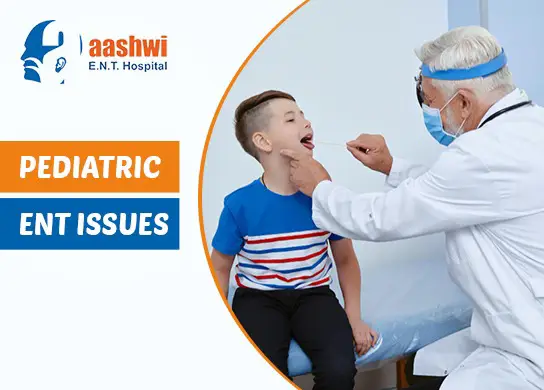
It’s 2 a.m., your little one is tugging at an ear, crying, and nothing you do seems to help. Or maybe your child has been snoring loudly for weeks, or catches one throat infection after another. If this sounds familiar, you’re far from alone. Pediatric ENT issues are among the most common reasons parents visit a doctor, and most of them are very treatable when they’re spotted early.
Here’s a plain-language guide to what’s normal, what’s not, and when to get help.
Pediatric ENT Problems
Why Children Get ENT Problems So Often
A child’s ears, nose, and throat aren’t just smaller versions of an adult’s. The tube connecting the middle ear to the back of the nose (the Eustachian tube) is shorter and more horizontal in kids, so fluid drains poorly and germs travel easily. Their adenoids and tonsils are also relatively large in the early years and are busy fighting infections. Add school, daycare, shared toys, and changing seasons, and it’s no surprise that children’s ear, nose, and throat troubles show up so frequently.
The Most Common Pediatric ENT Issues
- Ear infections: Pain, tugging at the ear, fever, irritability, trouble sleeping, and sometimes fluid draining from the ear are typical signs. Many mild infections settle on their own, but some need treatment, so a proper ear examination matters.
- Fluid behind the eardrum: Sometimes fluid stays after an infection, with no pain at all. It can quietly muffle hearing, which may show up as the TV getting louder, “what?” becoming a favourite word, or a child who seems inattentive at school.
- Tonsillitis and sore throats: Red, swollen tonsils, fever, pain on swallowing, and bad breath are common. Not every sore throat needs antibiotics, because many are viral. A doctor can tell the difference.
- Enlarged adenoids: These sit behind the nose, where you can’t see them. When enlarged, they can cause a constantly blocked nose, mouth breathing, snoring, and repeated ear problems.
- Allergies and sinus trouble: A runny or blocked nose, sneezing, itchy eyes, and a morning cough that last weeks may point to allergy rather than a cold.
- Nosebleeds: Usually harmless and caused by dry air or nose picking. Sit your child upright, lean them slightly forward, and pinch the soft part of the nose for 10 minutes. Frequent or heavy bleeding should be checked.
- Foreign objects: Toddlers love to put beads, seeds, and small toys into noses and ears. Please don’t try to dig them out yourself, as that can push them deeper.
Signs That Deserve Attention
Children can’t always tell you what’s wrong, so watch behaviour as much as symptoms. Consider an ENT visit if your child:
- Has three or more ear infections in six months, or fluid in the ear that lasts more than three months
- Snores loudly most nights, gasps or pauses in breathing during sleep, or is restless and tired in the day
- Has repeated throat infections
- Doesn’t respond to quiet sounds, or has delayed or unclear speech
- Breathes through the mouth most of the time
- Has a blocked nose lasting more than 10 to 14 days
- Has frequent nosebleeds
Seek urgent care straight away if there is difficulty breathing, noisy breathing when at rest, a high fever with severe ear or throat pain, swelling behind the ear, drooling with trouble swallowing, or a button battery or magnet that may have been swallowed or put in the nose or ear.
Simple Things You Can Do at Home
Good habits prevent a lot of trouble.
- Teach regular handwashing: It’s the simplest way to cut down infections.
- Keep cotton buds out of ears: Earwax protects the ear and usually clears by itself. Cotton buds push it deeper.
- Use saline drops or spray for a blocked nose, especially before feeding or bedtime in little ones.
- Avoid smoke: Tobacco smoke raises the risk of ear infections and breathing problems.
- Don’t give medicines on a guess: Antibiotics, ear drops, or cold medicines should only be given when a doctor says so, and in the dose prescribed for your child’s age and weight.
- Dry the ears after swimming by tilting the head and gently towelling the outer ear.
What to Expect at a Kids ENT Clinic
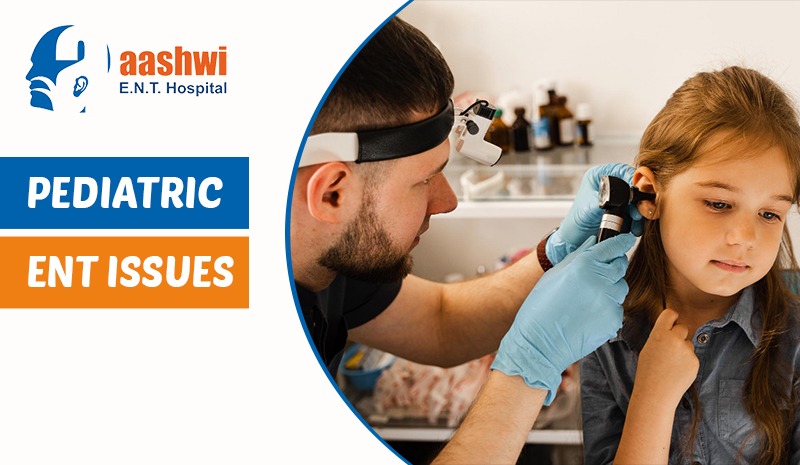
A good kids ENT clinic is built around making children feel safe. The doctor will ask about symptoms, sleep, hearing, and feeding, then gently examine the ears, nose, and throat. Depending on the problem, they may suggest a hearing test, an allergy evaluation, or imaging. Many children improve with medicines and simple care. Surgery, such as removing adenoids or tonsils, or placing small ventilation tubes in the ears, is considered only when it’s clearly the best option and is always discussed with parents first.
You can find more about ENT care for kids from Dr Mihir Mehta at Aashwi ENT Hospital, and learn more at drmihir.com.
Frequently Asked Questions
1. How do I know if my baby has an ear infection?
Look for ear tugging, crying that gets worse when lying down, fever, poor feeding, or disturbed sleep. Since babies can’t point to the pain, it’s best to have them examined.
2. Do all ear infections need antibiotics?
No. Many mild infections clear up on their own, and some are viral. Your doctor will decide based on your child’s age, symptoms, and examination.
3. Will my child outgrow frequent throat infections?
Many children do as their immune systems mature. If infections are very frequent or affect school, sleep, or growth, an ENT specialist can advise whether further treatment is needed.
4. Is snoring normal in children?
Occasional snoring during a cold is common. Loud, nightly snoring, especially with pauses in breathing or daytime tiredness, should be checked, as it can affect sleep, behaviour, and learning.
5. Can I clean my child’s ears with cotton buds?
It’s best not to. Wipe only the outer ear with a soft cloth. If you think wax is blocking the ear, let a doctor take a look.
6. When should I take my child to an ENT specialist rather than a general pediatrician?
If problems keep coming back, last longer than expected, affect hearing, sleep, or speech, or don’t improve with first-line treatment, a specialist visit is a good next step.
The Takeaway
Most pediatric ENT problems are common, manageable, and not worth panicking about. Stay observant, trust your instincts, and don’t wait too long when something feels off, especially with hearing, breathing, or sleep. Early care protects your child’s comfort now and their development later.
Book your appointment today.
 Aashwi ENT Hospital — 25, Sumangalam Co-op Housing Society, Drive-In Road, opp. Sunset Drive Cinema, Bodakdev, Ahmedabad – 380054
  +91 997 989 1672
  Dr Mihir K. Mehta — MBBS, DLO, MS-ENT | 23+ Years ENT Experience
For more information, click on the link below: