

Ahmedabad’s air quality crosses the World Health Organization’s safe threshold for PM2.5 on more days per year than most residents realise. The city’s industrial corridors — Naroda, Odhav, Vatva, and the broader GIDC zones — release particulate matter, sulphur dioxide, nitrogen oxides, and volatile organic compounds continuously. Vehicle density on SG Highway, CG Road, and the BRTS corridors adds diesel exhaust and traffic-derived PM10 to the ambient load. During winter temperature inversions, festival periods, and after construction dust events, AQI readings in Ahmedabad regularly exceed 200—the “very unhealthy” threshold that triggers health advisories for sensitive populations in international systems. Dr Mihir Mehta at Aashwi ENT Hospital, Bodakdev, Ahmedabad sees the clinical consequences of this air quality every week. This guide explains what different pollutants do to different ENT structures—and what can be done to reduce the damage.
How Pollution Affects ENT Health in Ahmedabad: What the Air Is Actually Doing to Your Nose, Throat, and Ears
PM2.5, PM10, and Gases — Why the Particle Size Determines the Damage
Not all air pollution affects the ENT system the same way. The size and chemical composition of pollutant particles determine how deep they penetrate and which structures they damage.
- PM10 (particles 10 micrometres or smaller) are filtered by the nose with moderate efficiency. The nasal mucosa’s mucociliary system traps most PM10 in the nasal passage, where they are swept toward the nasopharynx and cleared by swallowing. In this process, the mucosal lining bears the inflammatory burden — PM10 exposure drives allergic sensitisation in susceptible individuals, thickens the nasal lining over time, and narrows the sinus drainage pathways that chronic sinusitis ultimately obstructs.
- PM2.5 (particles 2.5 micrometres or smaller) bypass the nasal filtering system almost entirely. They are small enough to deposit directly on the nasal and sinus mucosal surface, the laryngeal mucosa, and, in higher concentrations, to penetrate to the small airways. At the mucosal level, PM2.5 particles carry metal ions, polycyclic aromatic hydrocarbons, and endotoxins that trigger a direct inflammatory response independent of allergy. This is why people without any allergy history develop nasal inflammation in high-PM2.5 environments — the response is not IgE-mediated. It is a direct chemical irritant effect that worsens with every year of sustained exposure.
- Gaseous pollutants — sulphur dioxide from industrial sources and ozone formed from vehicle exhaust in sunlight — produce a different type of mucosal damage. They dissolve in the mucosal surface fluid and form acids that damage the ciliary cells responsible for clearing mucus from the nasal passage and sinuses. Loss of ciliary function is the mechanism behind the persistent congestion and recurrent sinus infections that long-term Ahmedabad residents in high-exposure zones develop even without structural nasal pathology.
What Sustained Pollution Exposure Does to the Nose
The nasal passage is the primary interface between Ahmedabad’s air and the body’s respiratory system. It bears the highest concentration of pollutant exposure of any ENT structure.
Short-term exposure — a high-AQI day, a dust storm — produces acute mucosal inflammation. The nose runs, swells, and feels blocked. These effects resolve within one to two days after exposure drops.
Sustained exposure over months and years produces structural changes that do not resolve. The mucosal lining thickens — a process called mucosal hypertrophy — narrowing the nasal cavity. Goblet cells that produce mucus proliferate, changing the consistency and volume of nasal secretions. The cilia thin and lose coordinated beating. Inflammatory cells — eosinophils and mast cells — accumulate in the submucosal tissue and lower the threshold for allergen reactivity, which is why mild dust sensitivity becomes severe allergic rhinitis in someone who has lived near Naroda or Odhav for three to five years.
Nasal polyps develop in this chronically inflamed environment. They are not caused by a single exposure event — they are the cumulative result of years of sustained mucosal inflammation producing soft tissue overgrowth in the sinus drainage pathways. Dr Mihir Mehta‘s nasal polyp cases at Aashwi ENT Hospital in Bodakdev are disproportionately concentrated among patients from the industrial zones of north and east Ahmedabad — a pattern that is not coincidental.
What Pollution Does to the Sinuses
The sinuses are air-filled cavities that drain into the nasal passage through small openings — the sinus ostia. Normal sinus function requires these openings to remain patent, cilia in the sinus lining to sweep mucus toward them, and mucosal inflammation to remain below the threshold that causes swelling to obstruct drainage.
Sustained pollution exposure attacks all three simultaneously. Thickened mucosal lining narrows the ostia. Impaired ciliary function reduces mucus clearance. Chronic low-grade inflammation keeps the tissue at the threshold of obstruction — meaning even a minor cold or allergen exposure triggers a full sinus blockage that a healthy sinus would recover from in days.
This is the mechanism behind the chronic sinusitis cluster in Ahmedabad’s industrial zones. Workers in GIDC factories, residents of Naroda and Vatva, and commuters who spend one to two hours daily in heavy traffic on the city’s major corridors all present with this pattern: once occasional sinusitis becomes frequent, and frequent becomes constant, without any single identifiable cause.
The cumulative nature of this damage is its most clinically significant feature. There is no dramatic event — no single exposure that triggers the transition from occasional sinus problem to chronic disease. It builds annually, one working year at a time, until the structural changes are visible on CT imaging.
Pollution and the Larynx — Voice Damage From the Outside In
The larynx is exposed to every pollutant that gets past the nasal filtering system — and PM2.5, as described above, largely does. The laryngeal mucosa — the lining of the vocal cords and surrounding structures — responds to sustained PM2.5 and gaseous pollutant exposure with inflammation that manifests as chronic hoarseness, vocal fatigue, and, in long-term occupational exposure cases, structural changes to the vocal cord mucosa.
Teachers in schools near industrial areas in north Ahmedabad, sales professionals commuting through high-traffic corridors, and factory workers in GIDC zones consistently report voice fatigue and hoarseness that they attribute to voice overuse. Some of that is accurate. A significant component is laryngeal mucosal irritation from daily pollutant exposure that they have no framework for connecting to their working environment.
Sustained laryngeal pollutant exposure also increases the risk of laryngeal leukoplakia — white patches on the vocal cord mucosa from sustained chemical irritation — particularly in smokers, where the two mucosal insults compound each other. Any worker in Ahmedabad’s industrial zones who smokes and develops persistent hoarseness requires laryngoscopy without delay.
The Olfactory System — The ENT Damage Nobody Notices Until It Is Gone
The olfactory nerve fibres are remarkably exposed anatomically — they pass through the cribriform plate at the top of the nasal cavity with their endings sitting directly in the nasal airstream. This exposure makes them among the most vulnerable neural structures in the body to airborne chemical damage.
Sustained PM2.5 and volatile organic compound exposure causes direct olfactory nerve fibre loss over years. The process is gradual and silent — olfactory sensitivity reduces incrementally without the person noticing until the loss is significant. Clinical studies in high-pollution urban environments have consistently shown that residents in heavily polluted zones have measurably lower olfactory function than those in cleaner areas of the same city, independent of age, smoking status, and nasal pathology.
In Ahmedabad’s context, the industrial zone residents who present to Dr Mihir Mehta with “my sense of smell has never been the same after a bad sinus infection” often have not recovered from the infection at all — their baseline olfactory function was already suppressed by years of cumulative pollutant exposure before the infection occurred, and the infection simply crossed the threshold of subjective awareness.
Practical Protection That Is Evidence-Based and Realistic
Complete protection from Ahmedabad’s ambient pollution is not possible for residents of the city. Meaningful reduction is:
- Daily saline nasal irrigation — morning rinsing of the nasal passage with isotonic saline physically removes deposited PM2.5, PM10, and chemical irritants before the mucosal inflammatory response is triggered. This is the single most effective and most underused protective measure for ENT health in urban pollution environments.
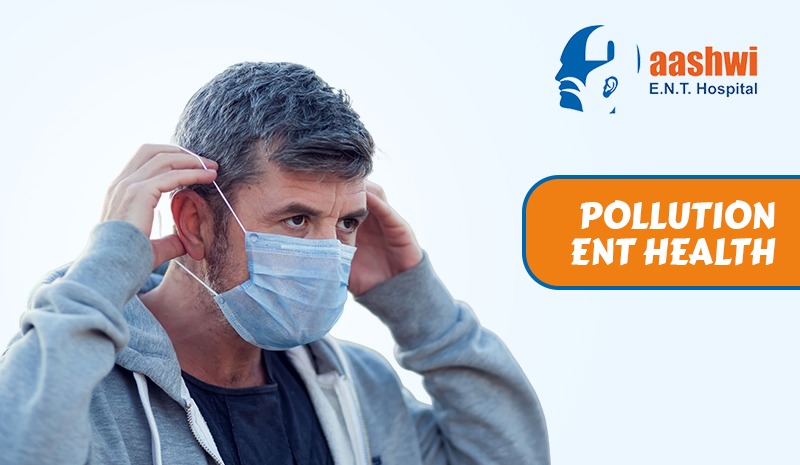
- N95 mask during high-AQI periods and outdoor commuting — a correctly fitted N95 filters PM2.5 at 95 percent efficiency. Cloth and surgical masks do not filter PM2.5 meaningfully. For residents of Naroda, Vatva, Odhav, and high-traffic corridors, daily N95 use during commuting reduces cumulative mucosal exposure significantly.
- HEPA air purification in bedrooms and workspaces — the majority of pollutant exposure in an Ahmedabad resident’s day occurs indoors in inadequately ventilated spaces. A HEPA purifier in the sleeping environment reduces nighttime mucosal exposure — the period when the nasal lining performs its recovery from daytime insults.
- Annual ENT evaluation for high-exposure individuals — factory workers, outdoor vendors, construction workers, and long-distance commuters in Ahmedabad should have annual nasal endoscopy and olfactory function assessment. Catching mucosal changes and early polyp formation allows medical management that prevents surgical escalation.
Frequently Asked Questions
What AQI level is genuinely dangerous for ENT health in Ahmedabad?
The WHO safe daily average for PM2.5 is 15 micrograms per cubic metre. In Ahmedabad, the annual average in industrial zones exceeds 60 to 80 micrograms per cubic metre. Days where AQI crosses 150 — classified as “unhealthy for all” — produce acute mucosal inflammation in most adults regardless of pre-existing sensitivity. Days above 200 produce measurable ciliary dysfunction after sustained exposure. The problem is not single high-AQI days — it is the cumulative load across 365 days per year, every year.
Can pollution damage be reversed if I move to a cleaner environment?
Functional changes — mucosal inflammation, ciliary impairment, mild olfactory reduction — improve meaningfully when exposure drops. Structural changes — nasal polyps, significant mucosal hypertrophy, and olfactory nerve fibre loss from long-term exposure — are less reversible. The earlier exposure is reduced, the more recovery is possible. Moving from a GIDC zone to a lower-pollution area of Ahmedabad — Bopal, Thaltej, or Satellite — produces measurable improvement in ENT symptoms within three to six months in most patients.
Does wearing a mask all day prevent pollution damage to the nose and throat?
An N95 worn consistently reduces pollutant inhalation significantly, but complete prevention is not achievable through masking alone because pollutants also enter through the eyes and skin surfaces, and because consistent N95 use throughout a working day is not realistic for most people. Masking during peak exposure periods — outdoor commuting, high-dust activities, high-AQI days — combined with saline irrigation and indoor HEPA filtration produces the most meaningful combined protection.
Is the ENT damage from pollution the same as from smoking?
Both cause chronic mucosal inflammation, impaired ciliary function, and increased cancer risk in the larynx and airways. Smoking concentrates a higher chemical load in a shorter time period and carries a higher individual cancer risk. Pollution delivers lower concentrations but affects the entire exposed population rather than individual smokers. For workers in Ahmedabad’s industrial zones who also smoke, the two exposures compound each other — the laryngeal malignancy risk for a smoking factory worker in a GIDC zone is substantially higher than for either exposure alone.
How do I know if my chronic sinus or nose problem is pollution-related?
A pollution-related ENT pattern typically develops gradually over years of residence in a high-exposure zone, worsens during high-AQI periods and monsoon dust events, and affects other household members who share the same exposure. It is not triggered by a single identifiable event. A nose examination at Aashwi ENT Hospital establishes whether mucosal changes consistent with chronic irritant exposure are present — which guides management differently from allergy-driven or infection-driven rhinitis.
Where can I get an ENT evaluation for pollution-related problems in Ahmedabad?
Dr Mihir K. Mehta at Aashwi ENT Hospital, Bodakdev, Ahmedabad provides nasal endoscopy, olfactory function assessment, and full ENT evaluation for pollution-related conditions. The hospital is at 25, Sumangalam Co-op Housing Society, Drive-In Road, opp. Sunset Drive Cinema, Bodakdev, Ahmedabad – 380054. Contact: +91 997 989 1672. No referral required.
The City’s Air Is Not Getting Cleaner Fast Enough — Your Mucosal Lining Cannot Wait
Every year of unprotected high-pollution exposure in Ahmedabad adds another layer of mucosal damage that medical treatment can manage but cannot fully reverse. The practical response is not to wait for air quality to improve — it is to reduce personal exposure now and have ENT changes caught early enough to prevent them from becoming structural.
Dr Mihir Mehta at Aashwi ENT Hospital provides that assessment — and the management plan that follows from it.
Book your ENT evaluation today.
Aashwi ENT Hospital — 25, Sumangalam Co-op Housing Society, Drive-In Road, opp. Sunset Drive Cinema, Bodakdev, Ahmedabad – 380054 +91 997 989 1672 Dr Mihir K. Mehta — MBBS, DLO, MS-ENT | 23+ Years ENT Experience
For more information, click on the link below:
Dr Mihir Mehta, Satellite, Ahmedabad | Top ENT, Throat, Nose, Sleep Apnea Doctor, Specialist