

If your voice has been sounding rough, tired, or breathy for weeks, it’s easy to blame it on a cold that just won’t quit. But sometimes the real cause is something more specific: vocal cord nodules. These small growths on the vocal cords are one of the most common reasons people end up with a persistently hoarse or strained voice, and they’re especially common among teachers, singers, call center staff, and anyone else who uses their voice heavily for a living.
This guide breaks down what vocal cord nodules actually are, why they happen, how to spot them, and what your treatment options look like.
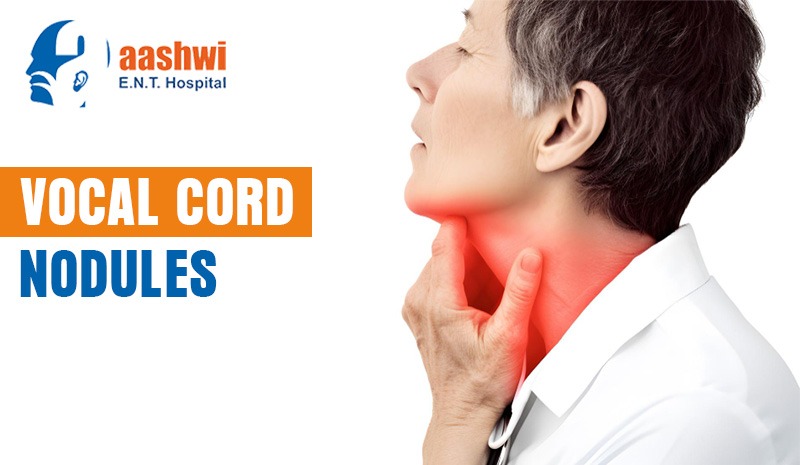
What Are Vocal Cord Nodules?
Vocal cord nodules are small, callus-like growths that form on both vocal cords, usually at the point where they meet and vibrate the most during speech or singing. Think of them the way you’d think of a callus on your hand from repetitive friction — except this callus forms on the delicate tissue of your voice box.
They typically appear in pairs, one on each vocal cord, sitting opposite each other. Because they’re firm and symmetrical, they interfere with the smooth closure of the vocal cords, which is exactly why the voice starts to sound different.
Unlike vocal cord polyps, which are usually softer, single-sided, and can appear suddenly, nodules build up gradually from repeated vocal stress. They’re often called “singer’s nodules” or “screamer’s nodules,” though you don’t need to be a performer to develop them.
What Causes Vocal Cord Nodules?
The root cause is almost always repetitive vocal strain. Some common contributors include:
- Prolonged loud talking or shouting — coaches, teachers, and fitness instructors are frequent sufferers
- Singing with poor technique, especially without proper breath support
- Speaking in a pitch that’s unnatural for your voice
- Chronic throat clearing, often linked to acid reflux or allergies
- Smoking, which dries and irritates the vocal cords
- Not resting the voice after an illness or laryngitis
Essentially, any behavior that repeatedly slams the vocal cords together with force, without adequate recovery time, can set the stage for nodules to form.
Common Symptoms
Vocal cord nodules don’t usually cause pain, which is part of why they’re often ignored until the voice change becomes hard to overlook. Watch for:
- Persistent hoarseness lasting more than two to three weeks
- A breathy or “airy” quality to the voice
- Voice fatigue after short periods of talking
- A lower-than-usual pitch, or difficulty hitting higher notes
- A sensation of a lump in the throat
- Reduced vocal range, especially noticeable in singers
If hoarseness sticks around for more than two to three weeks, it’s worth getting it checked rather than waiting it out, since several ENT conditions can present with similar symptoms.
How Are Vocal Cord Nodules Diagnosed?
An ENT specialist typically diagnoses nodules through a procedure called laryngoscopy, where a thin, flexible scope with a camera is passed through the nose or mouth to get a clear view of the vocal cords. This allows the doctor to see the nodules directly, check their size and position, and rule out other causes of voice change, such as polyps, cysts, or, in rare cases, more serious growths.
A detailed voice and lifestyle history — how much you talk, sing, or shout in a typical day — also helps pinpoint the underlying habits driving the problem.
Treatment Options
The encouraging news is that vocal cord nodules are highly treatable, and surgery is rarely the first step.
1. Voice Therapy
This is the frontline treatment for most cases. A speech-language pathologist works with you on breathing technique, pitch control, and healthier speaking habits. Many nodules shrink or resolve entirely once the strain that caused them is corrected.
2. Vocal Rest
Giving the voice a genuine break — avoiding shouting, whispering, and excessive talking — allows inflamed tissue to settle.
3. Treating Underlying Triggers
If reflux or allergies are contributing to throat clearing and irritation, managing those conditions can prevent nodules from recurring.
4. Surgery
Reserved for nodules that don’t respond to therapy after a reasonable trial period, or that are large enough to significantly affect voice quality. It’s a minor procedure, but it’s typically considered a last resort, since it doesn’t address the habits that caused the nodules in the first place.
Preventing Vocal Cord Nodules
Good voice care goes a long way in preventing nodules from forming or coming back:
- Warm up your voice before extended speaking or singing sessions
- Stay well-hydrated
- Avoid shouting; use amplification (a mic or speaker) when addressing large groups
- Take regular vocal breaks throughout the day
- Address chronic throat clearing and reflux early
- Don’t smoke, and limit exposure to secondhand smoke
Simple, consistent habits protect the vocal cords far better than any treatment does after damage has already set in.
Final Thoughts
Vocal cord nodules are common, largely preventable, and very manageable when caught early. If your voice has been off for more than a couple of weeks, it’s worth having it evaluated by an ENT specialist rather than pushing through and hoping it resolves on its own. For more information on voice-related ENT conditions, visit drmihir.com.
Frequently Asked Questions
1. Are vocal cord nodules cancerous?
No. Vocal cord nodules are benign, non-cancerous growths caused by repeated vocal strain, not by abnormal cell growth.
2. Can vocal cord nodules go away on their own?
Small nodules can sometimes resolve with vocal rest and correcting the habits that caused them. Larger or long-standing nodules usually need voice therapy to fully resolve.
3. How long does it take for vocal cord nodules to heal?
With consistent voice therapy and rest, many people see noticeable improvement within a few weeks to a couple of months, though timelines vary by severity.
4. Do I need surgery for vocal cord nodules?
Not usually. Most cases improve with voice therapy and lifestyle changes. Surgery is considered only when nodules persist despite therapy or significantly affect voice quality.
5. How can I tell the difference between nodules and normal hoarseness from a cold?
A cold-related hoarseness typically clears up within one to two weeks. If hoarseness lasts longer, especially without other cold symptoms, it’s worth getting evaluated by an ENT.
6. Are vocal cord nodules only a risk for singers?
No. While singers are commonly affected, anyone who uses their voice heavily and loudly — teachers, coaches, call center employees, and even parents of young children — is at risk.
Book your appointment today.
Dr Mihir K. Mehta — MBBS, DLO, MS-ENT | 23+ Years ENT Experience
For more information, click below:
Dr Mihir Mehta, Satellite, Ahmedabad | Top ENT, Throat, Nose, Sleep Apnea Doctor, Specialist